A home can look freshly painted from the curb and still have a coating system that is already starting to fail underneath. In Sammamish, frequent rain, shaded elevations, tree cover, and long damp periods make Exterior Painting Installation less about changing color and more about controlling moisture, surface condition, and timing. Washington Custom Painting and Remodeling approaches exterior work with that reality in mind, because the most expensive paint on the shelf cannot compensate for a wet, dirty, or unstable substrate.
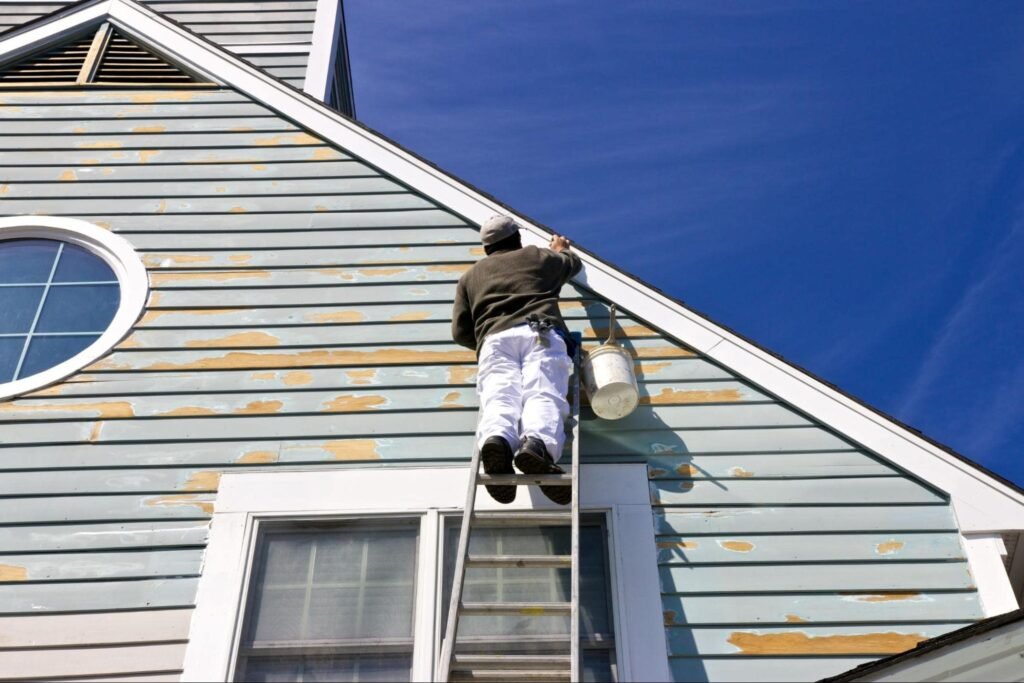
Homeowners often notice warning signs in different places: peeling along fascia boards, cracking around trim joints, fading on sun-exposed walls, or dark staining on siding that receives little direct light. Those symptoms do not always mean the entire exterior needs aggressive repair. They do mean the house should be assessed as a collection of surfaces with different exposure levels rather than as one uniform wall system.
Why Sammamish Exteriors Break Down Earlier Than Expected
Exterior coatings fail for several reasons, and moisture is only one of them. Ultraviolet exposure can weaken color and coating performance on bright elevations, while shaded siding may remain damp longer after rain. Failed caulk joints can admit water around trim, and bare end grain can absorb moisture more readily than a properly sealed face. Dirt, chalking, mildew, and loose paint can also interfere with adhesion.
In Sammamish, we’ve noticed that most homeowners first become concerned when the paint starts peeling, but the visible failure often began much earlier. A small open joint, an unprimed repair, or repeated wetting can weaken the coating system before flakes appear. That is why professional Exterior Painting services should begin with a close inspection rather than a quick color discussion.
Different materials need different treatment. Cedar may show tannin bleed or weathering, fiber-cement siding can have damaged edges or failing caulk, and older wood trim may need more sanding and spot priming than the main siding. Metal railings, garage doors, masonry accents, and previously stained features may require separate products or preparation steps.
The first useful question is not, “How many gallons will this take?” It is, “What is the condition of every surface that will receive paint?” A clear answer gives the homeowner a much better sense of what the project actually involves.
Paint Failure Often Starts Beneath the Surface
Sammamish’s wet climate creates a scheduling challenge that generic painting advice tends to oversimplify. A sunny afternoon does not automatically mean every wall is ready to coat. North-facing siding, areas behind dense landscaping, and boards protected from direct sun can stay damp longer than exposed walls.
A client in Sammamish reached out after noticing peeling around lower trim and a few siding joints. At first glance, it appeared to be a straightforward repaint. Once the surface was cleaned and loose coating was removed, several joints showed failed sealant and a small area of softened wood that needed attention before priming. Painting over those spots would have improved the appearance temporarily without correcting why the coating was releasing.
This leads to an objection many homeowners raise: “If the siding looks dry, why should the crew wait?” Surface appearance can be misleading. Porous wood, joints, end grain, and shaded sections may retain moisture after the face looks dry, so experienced crews judge readiness by actual site conditions rather than by the clock.
People searching for Exterior painters near me should also ask what happens if washing exposes rot, failed caulk, or loose boards. That question is often missing from basic painting discussions. Some repairs may fall within normal preparation, while larger carpentry work can change the project scope. A written estimate should explain where that line sits before work starts.
One useful insight is to think in terms of “exposure zones.” The front, rear, shaded side, sun-facing side, lower siding, fascia, and trim may age at different rates. Treating the entire house as though every elevation has the same condition can lead to under-preparation in the places that need the most attention.
How Washington Custom Painting and Remodeling Builds Prep Around the House
A better process starts by mapping the condition of the exterior before choosing the final coating system. The crew should identify loose paint, chalking, mildew, damaged caulk, bare wood, failing trim, suspect siding, previous patchwork, and access challenges. Each issue then gets a defined preparation step instead of being buried inside a vague promise to “prep as needed.”
Cleaning removes dirt and biological growth that can interfere with adhesion. Scraping and sanding create a more stable edge around failed coatings. Bare or repaired areas may need primer, while open joints should be recaulked where appropriate. Landscaping, windows, roof surfaces, fixtures, walkways, decks, and adjacent materials should be protected before application begins.
The question many competitors avoid is simple: how much surface repair is included in the painting price? Minor prep and major repair are not the same thing. Homeowners deserve to know if deteriorated trim, siding replacement, or larger carpentry corrections will be priced separately. That clarity prevents a low initial estimate from becoming a much larger bill halfway through the project.
The Best Exterior Painting Services also match products to the substrate and exposure instead of treating paint selection as a brand contest. Primer compatibility, sheen, color change, existing coating condition, and manufacturer requirements all matter. Darker colors can behave differently on highly exposed surfaces, while older wood may need a stain-blocking or bonding primer depending on its condition.
Application technique matters too. Spraying can be efficient on suitable surfaces, but back-rolling or brushing may be appropriate where the coating needs to be worked into texture, edges, or porous material. The method should follow the surface rather than the crew’s preferred shortcut.
Questions Worth Asking Before the First Ladder Goes Up
A good estimate should tell you exactly what is being painted. Confirm whether the scope includes siding, fascia, soffits, doors, garage doors, trim, railings, foundations, decks, or other exterior components. Ask how many coats are planned, which products will be used, and what conditions would trigger additional primer or repair work.
Working with clients in Sammamish, our team found that the most useful walkthroughs happen outdoors, elevation by elevation. Homeowners often remember trouble spots only after seeing them up close: a peeling board behind shrubs, recurring mildew near a shaded corner, or cracking under a gutter line. Pointing these out before pricing helps keep the scope accurate.
For local planning, ask how the crew handles weather delays. A contractor should be able to explain what happens after rain, how surfaces are checked before work resumes, and whether a partial dry day is enough for the specific coating being used. The answer should be based on product requirements and substrate condition rather than pressure to stay on schedule.
If you are comparing the Best painting companies near me in Sammamish , review more than star ratings. Ask for a written scope, contractor registration details, proof of insurance where appropriate, payment terms, cleanup expectations, and the change-order process. Clear paperwork is especially valuable on exterior projects because hidden damage can appear after washing or scraping.
The Best Exterior Painting company for one house may not be the right fit for another if the scopes are different. Compare how each bidder talks about prep, moisture, repairs, masking, access, and final inspection. A lower number that leaves those items undefined is not necessarily the lower-cost project.
Finally, ask who performs the final walk-through. Check siding from several angles, inspect trim transitions, look for thin coverage, confirm masking has been removed cleanly, and verify that fixtures, windows, roofing, and hardscape are free of overspray. If leftover paint is provided, label it by surface and color so future touch-ups are easier.
Give the Next Coat a Better Starting Point
A durable exterior painting project in Sammamish begins with the condition of the house, not the color chip. Washington Custom Painting and Remodeling can help homeowners identify prep needs, moisture-sensitive areas, and repair questions before the project is priced. Start by requesting an itemized exterior assessment so you can compare contractors based on the work that will actually protect the home.
FAQs
1. How much does exterior painting cost in Sammamish, WA?
Exterior painting cost depends on home size, number of stories, siding material, access, trim detail, coating condition, and repair needs. A house that needs extensive scraping, priming, or wood replacement will cost more than one with sound surfaces. Ask for an itemized estimate rather than relying only on a price-per-square-foot figure.
2. What is the best time of year to paint a house exterior in Sammamish?
Late spring through early fall often provides more workable conditions, but the forecast alone should not decide the schedule. Temperature, recent rain, shade, surface moisture, and product requirements all matter. A responsible painter should confirm that each elevation is ready before applying primer or finish coats.
3. How long should siding dry after pressure washing?
There is no single drying time that fits every home. Wood type, temperature, airflow, sun exposure, shade, humidity, and recent rainfall all affect how quickly siding dries. The safer approach is to confirm actual surface readiness before painting rather than assuming the house is ready the next morning.
4. How can I tell if an exterior painter is legitimate?
Check contractor registration, insurance information, references, written scope, payment terms, and warranty details before signing. Ask who will perform the work and how extra repairs are approved. A legitimate painter should be able to explain the preparation process, products, schedule, and change-order policy without giving vague or evasive answers.
5. Does all old exterior paint need to be removed before repainting?
No. Sound, well-adhered paint can often remain after proper cleaning and preparation. Loose, peeling, or unstable coating should be removed to a firm edge, then sanded or feathered as needed. Bare substrate may need primer. Full stripping is usually reserved for situations where the existing coating system has widespread failure.